Cairns Industrial Concrete Contractors
Call (07) 4043 7499Industrial Concrete in Cairns
Industrial concrete in Cairns needs to handle serious punishment, from forklifts and heavy machinery to chemical spills and constant wear that quickly damages ordinary concrete floors. We build thick, reinforced slabs and hardstand areas designed for factories, workshops, depots and processing facilities. By matching concrete strength, reinforcement and joint layout to your operation, we help prevent cracking, surface breakdown and costly downtime throughout the year, even through the wet season.
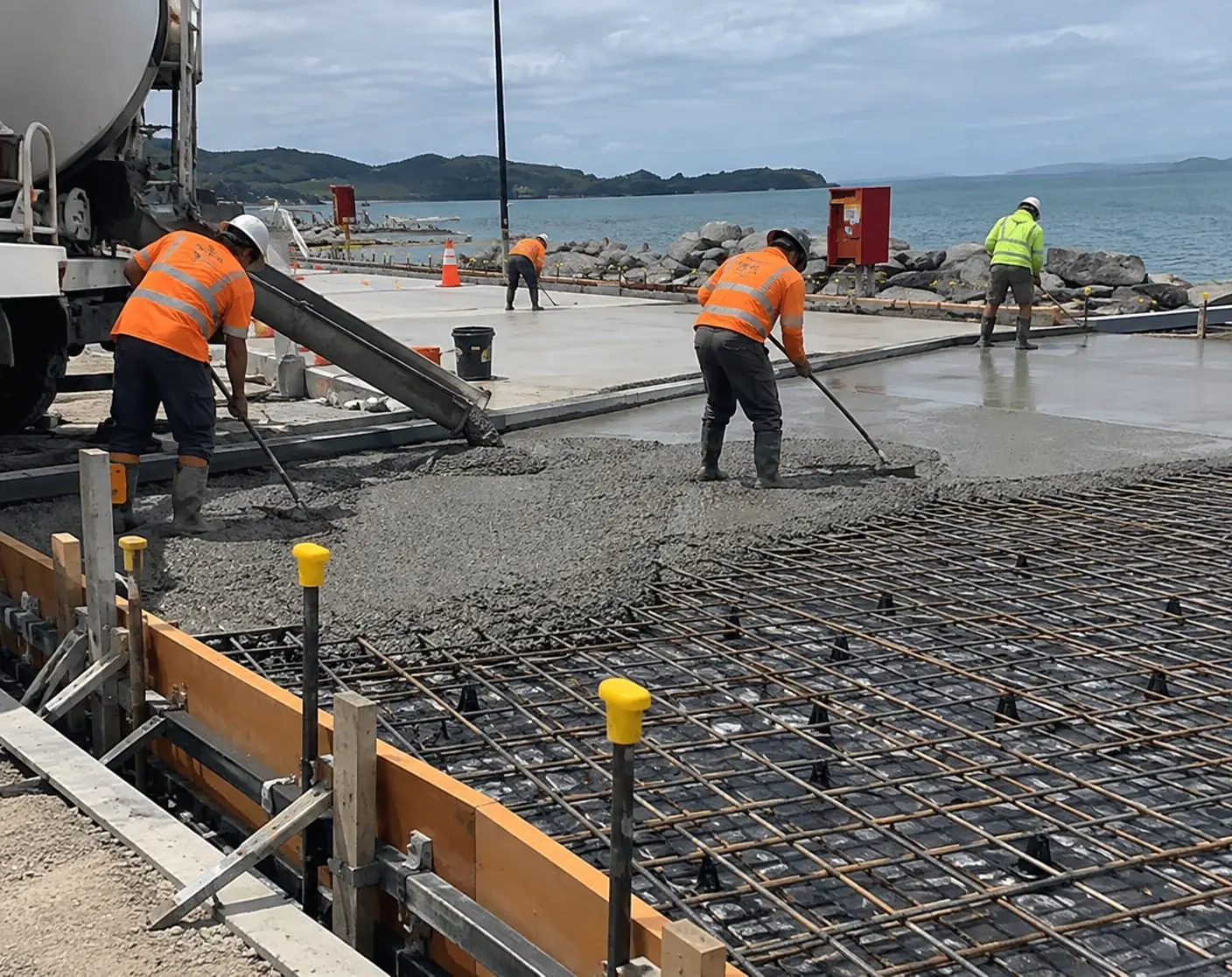
Our crews prepare compacted sub-bases, install steel reinforcement accurately and finish the surface to suit your needs, whether that is a hard-wearing trowel finish or a textured non-slip surface. We work around your operations wherever possible to keep your site running. If you are planning a new industrial floor, yard or loading bay, get in touch and we will talk through the best solution for your site, schedule and budget.
Industrial Concrete Services in Cairns
Warehouse and Logistics Floors
Floors for storage sheds, cold rooms and freight depots where pallet racking, reach trucks and constant pallet jack movement test the surface every day. We pour to tight flatness through the aisles so tall racking stays plumb and loaded trucks run smoothly from end to end.
Workshop and Mechanical Bays
Slabs for diesel workshops, fabrication sheds and plant repair bays, with recessed service pits, embedded steel angles and drainage to oil separators where needed. The surface is finished hard enough to take steel wheels, jacks and the odd dropped component without chipping.
Truck Aprons and Loading Docks
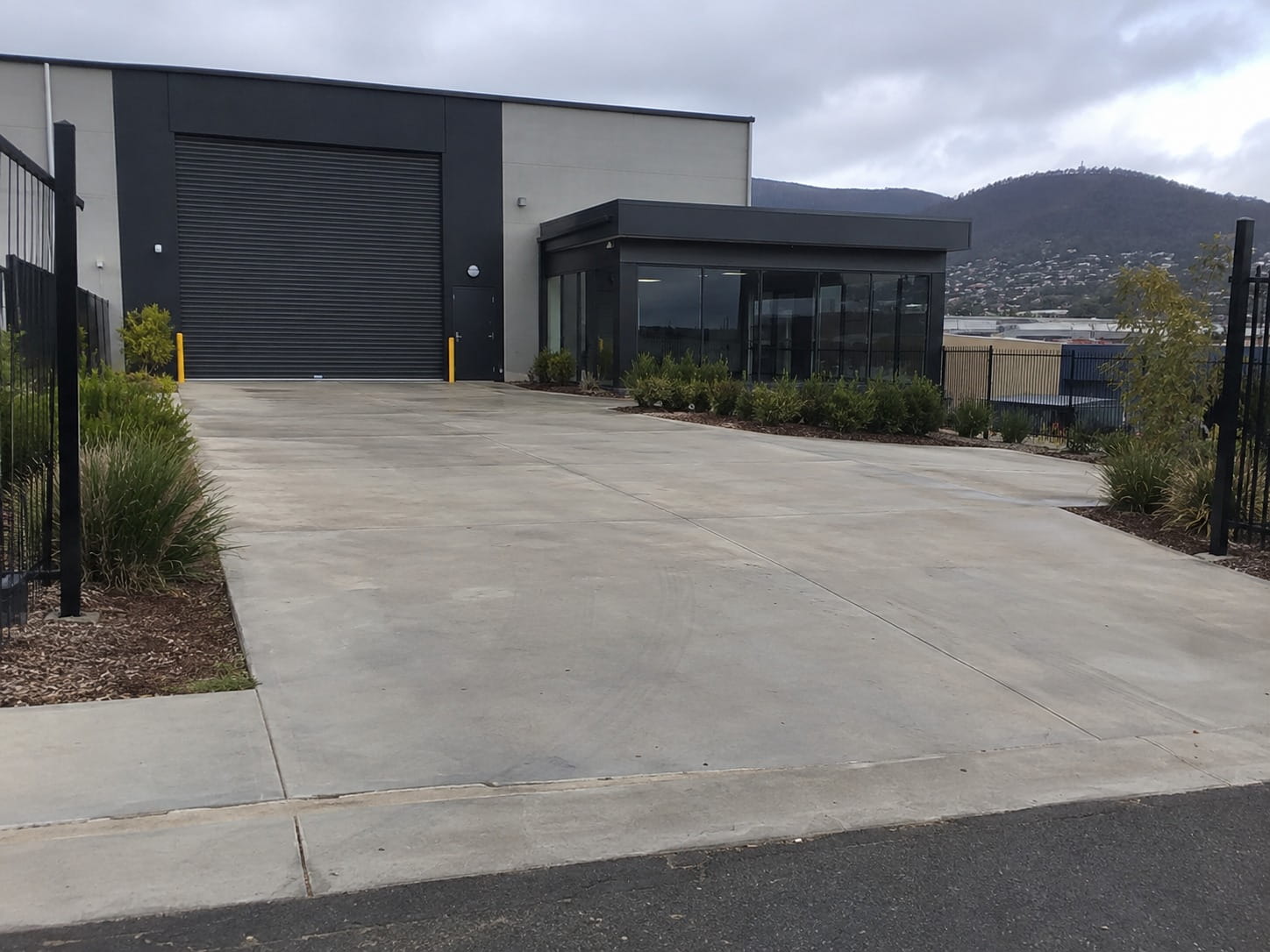
Concrete aprons outside roller doors and dock levellers take the full weight of braking and turning trucks. We thicken these areas, armour the slab edge at the dock face and slope the apron so tropical downpours drain away from the doors instead of flooding the shed.
Equipment Footings and Pads
Isolated pads for generators, compressors, cool room plant and water tanks, set to the levels and hold down positions on the manufacturer's drawings. Where machinery vibrates, we can separate the pad from the main slab so movement is not passed through the rest of the floor.
Rural and Packing Shed Slabs
Floors for packing sheds, cane equipment depots and machinery stores on farms around the Cairns region. Tractors, harvest bins and forklifts loaded with produce come in off muddy tracks, so we build robust slab edges and entry ramps that resist chipping and keep their shape.
Surface Hardeners and Line Marking
Dry shake hardeners worked into the fresh slab give a denser wearing face for steel wheels and dragged pallets. Once the floor has cured, we can coordinate line marking for aisles, pedestrian walkways and bay numbers so the building is ready for fit out.

Hire Industrial Concrete Contractors in Cairns: Three Easy First Steps
Industrial slabs need careful planning around loads, machinery and downtime. Whether you run a warehouse in Portsmith, a workshop or a cane industry depot, we can help scope the job so your operation keeps moving.
- Send the engineer's drawings: Email the structural design or specification so we can confirm slab thickness, steel, joints and concrete strength before we price.
- List your equipment: Tell us about forklifts, trucks, racking and any chemicals or wash-down areas so the finish and sealing match the real workload.
- Plan around your shifts: Meet our supervisor on site to map out staging, access for concrete trucks and work hours that limit disruption to your business.
We give commercial clients clear communication, safe sites and honest timelines. We schedule pours with the tropical weather in mind and keep you updated as each stage is completed. Speak with us on (07) 4043 7499, or email your project details for a free quote.
What Sets Our Industrial Concrete Team Apart in Cairns
Point Loads Taken Seriously
Racking legs, machine feet and jack stands focus enormous force onto a few square centimetres of concrete. We ask for base plate sizes and leg loads early, and make sure those numbers reach the slab design instead of being guessed on pour day.
Joints Detailed For Hard Wheels
Small, hard forklift wheels hammer every saw cut and panel edge they cross. Where we can, we keep joints out of the main travel lines, then use dowels or armoured joints across busy aisles so the edges stay supported and do not spall.
Curing Managed In Tropical Heat
A hot, breezy Cairns afternoon can strip moisture from a fresh slab within hours, leaving a weak, dusty wearing surface. We use evaporation control, wet curing or curing compounds as the job requires, and keep curing going for the full specified period.
Large Pours Run To A Plan
Supply, pump bookings and crew numbers are locked in well before the day. We break big floors into sensible sections, and keep a fallback plan ready in case a wet-season storm cell builds over the range in the middle of a pour.
Safe Work On Busy Sites
Industrial jobs often run next to live operations. We provide safe work method statements, set up exclusion zones and traffic control for site vehicles, follow your induction rules, and keep walkways clear for your staff while we work.
Quotes Broken Into Stages
Earthworks, base, steel, concrete, joints and curing are each priced separately. That makes it easy to compare tenders like for like, query any item that looks high, and understand the full scope of the job before you sign off.
Concrete Works in Cairns


Industrial Concrete FAQs
Answers on industrial floors in Cairns: what sets them apart, coping with wash-down and chemicals, rocky or clay sites, and when the slab can take full loads.
Mostly the size and nature of the loads it carries. A typical commercial slab is designed for cars and light trucks rolling across it. An industrial floor also has to carry heavy static loads such as racking uprights, machine bases and stacked stock, which concentrate a great deal of force into small areas. That usually means a thicker slab, more reinforcement, closer attention to joints and, on some sites, a suspended or engineered floor instead of one simply resting on the ground. Flatness matters more as well, because reach trucks and pallet jacks with small solid wheels quickly show up any unevenness in the surface.
Yes, provided that exposure is planned for from day one. Regular hosing needs falls that carry water to drains properly, and a mix and surface that hold up under constant wetting. Chemical resistance is more specific, because a surface that copes with diesel and oil may still be attacked by acids or cleaning agents. This comes up often on food processing, seafood, sugar and farm sites across the Far North. Let us know what the floor will be exposed to, and we will put forward a suitable mix, drainage layout and any protective coating, instead of a generic specification.
Not a problem, but it does affect the groundwork, and both turn up regularly around Cairns. On foothill blocks, granite close to the surface may need to be broken out to get an even formation, because a slab bearing on rock at one end and fill at the other can settle unevenly. Reactive clay heaves in the wet season and contracts in the dry, so it generally calls for a thicker crushed rock base compacted in layers, sound drainage and a design that allows for movement. Low-lying coastal land can bring soft ground and acid sulfate soils into the picture. On a big floor a geotechnical report is usually money well spent, and we price earthworks once we have inspected the site.
People can usually walk on it after 24 to 48 hours, but heavy industrial loads are another matter. Design strength comes at roughly 28 days, and for forklifts, loaded racking and heavy machinery that is the figure we work to, not the shorter wait that suits a car on a driveway. Tropical heat speeds up the initial set but makes careful curing more important, so hot-weather pours need early starts, evaporation control and proper moist curing. If downtime is costly, faster-gaining mixes are available at extra cost, and pouring in stages lets you reopen sections one at a time. We set out realistic dates in the quote.
Nearly always, and we would be wary of any contractor who says it is unnecessary. Machinery weights, rack configuration, wheel loads and traffic patterns all determine how thick the slab must be, how much steel it needs and where the joints go, and errors are costly to correct after the pour. Where an engineer has already produced plans, our crew follows them closely and we welcome a reinforcement inspection prior to the pour. If not, we can explain what information an engineer will want from you and suggest where to start. Depending on the project, a building certifier or Cairns Regional Council could have a role too, so check that early.
Other services you might need
Have an industrial slab on the drawing board?
Share your load figures and floor plan, and we will put together a detailed quote.