Cairns Concrete Layers
Call (07) 4043 7499Concrete Layers in Cairns
Need reliable concrete layers in Cairns? Our team places and finishes concrete for homes, businesses and civil projects, handling everything from formwork and reinforcement through to the final surface. Good concrete laying takes timing, skill and a solid understanding of local conditions. In Cairns, heat, humidity and sudden downpours can affect how concrete sets, so we plan every pour carefully in advance to protect the quality of your finished job.
We work with homeowners, builders and contractors on projects of all sizes, supplying clear communication, tidy sites and dependable timelines. Our crews prepare the ground, set accurate levels, pour and finish the concrete and make sure it cures properly for maximum strength. Whether you need a small slab or a large pour, we have the experience to get it right. Call us today to talk through your next concrete job.
Professional Concrete Layers in Cairns
Home Slabs And Outdoor Areas
Driveways, patios, paths, carport slabs and shed bases for homeowners across Cairns, from beachside units to hinterland acreage. One crew handles the job from start to finish, so the person who measured up and quoted is the same person on site when the concrete truck arrives.
Concrete For Builders And Developers
Subcontract concrete laying for builders, renovators and small developers who need slabs, paths and driveways done to their schedule. We read plans, work around the other trades on site and leave a clean, finished pour so the following trades can get started straight away.
Decorative Finishes Laid On Site
Exposed aggregate, coloured concrete, stencilled patterns and broom textures placed and finished by our own crew. Choosing the finish early lets us plan the mix, timing and sealing so the surface you picked from the sample board suits the heat and rain it will face.
Steps, Stairs And Landings
Concrete entry stairs for Queenslanders and raised homes, plus landings at the base of timber stairs where bare ground has worn away. We form even risers and treads that feel natural underfoot, and give each step a textured top so it stays safe after a shower.
Slab Removal And Replacement
Cracked, heaving or sunken concrete broken out, carted away and replaced with a new slab built properly from the ground up. We handle demolition, disposal and fresh groundwork in one job, which is often simpler than coordinating a separate excavator and concrete crew yourself.
Small Pours And Odd Jobs
Bin pads, air conditioner plinths, clothesline bases, fence post footings and minor step repairs that larger outfits often turn down. We group small tasks into a single visit where possible, so you are not paying a separate call out for each one.

Hire Concrete Layers in Cairns: Three Easy First Steps
Every concrete job, big or small, begins with a conversation about what you need and how the site sits. Our Cairns concrete layers keep that first step simple, and you are welcome to ask questions before deciding anything.
- Phone and talk it over: Call (07) 4043 7499, describe the job in your own words, and we will explain the likely approach and what we need to price it.
- Email your drawings: Forward builder's plans, council approvals or even a hand sketch, and we will read through them carefully before getting back to you.
- Have us walk the block: We look at soil, levels and machine access in person, so nothing in the final figure is based on guesswork.
From driveways in Edge Hill to shed pads out at Gordonvale, you deal with local concreters who explain each stage clearly and keep the site tidy. Expect straight answers, realistic timeframes and a written price you can compare. Reach out using whichever option above feels easiest, and let's get your concrete underway.
The Layers, In Order
Residential work makes up most of our pours: house slabs, driveways, footpaths, patios and footings throughout Greater Cairns, on new builds as well as older homes where the original concrete has worn out. Whether the call comes from a homeowner, a builder or a property manager, the same challenges tend to appear: ground that shifts with the seasons, and sloping or hard-to-reach blocks.
On new homes we follow the engineered drawings and fit in with the builder's programme, so the framers can start on time. On established properties the first job is working out what made the old concrete fail, because pouring new concrete over the same weak base usually means the same cracks return within a few wet seasons.
Sheds, garages and workshops keep us busy too. The right slab depends on what it will hold: a ride-on mower and garden gear puts far less demand on concrete than a car on stands or a row of heavy machinery, so thickness and steel are chosen to suit the intended use instead of one size for all.
Driveways and parking pads usually carry the heaviest regular loads on a property, and on Cairns foothill blocks they often do it on a slope. Excavation depth, compaction, steel placement and control of runoff all become more critical on a hillside than on level ground.
Patios and outdoor living spaces are where the finish really counts, as people walk on them barefoot and see them every day. We weigh up broom, exposed, honed, coloured or stamped surfaces against the style of the house and how much direct sun the space gets, since dark surfaces can get very hot underfoot.
Smaller jobs such as paths, entries, steps and pool surrounds follow the same sequence on a smaller scale. They are also where truck, pump and cartage charges add the most per square metre, so grouping several small areas into one pour often saves money.
Commercial Laying We Take On
On the commercial side we build car parks, forecourts, loading docks, workshop floors, storage yards and hardstands for local businesses, developers and property managers. These slabs are designed to a much tougher standard, since delivery trucks and parked plant load concrete far harder than a family car.
Car Park And Forecourt Slabs
Graded so stormwater runs off to pits, reinforced for constant vehicle movement, and thickened where cars bunch up at entries, exits and tight turns.
Industrial Floor Slabs
Internal slabs built flat and hard-wearing, with joint spacing and surface tolerances chosen to suit the forklifts, racking or machinery that will use them.
Loading Dock Aprons
A heavier design for reversing trucks and parked loads, which stress concrete far more than vehicles simply driving through.
Hardstand And Yards
Storage and plant yards designed for point loads and the twisting forces from turning wheels, which quickly break up thin slab edges.
Courtyards For Cafes And Shops
Courtyards, outdoor dining terraces and shopfront approaches for Cairns venues, finished to look good and give customers secure footing.
Staged Commercial Pours
Big areas split into manageable pours with construction joints detailed properly, letting the business keeps running and every section gets a careful finish.
Machinery And Tank Bases
Flat, steel-reinforced plinths for water tanks, compressors, generators and fixed plant, sized for their working weight and detailed to resist vibration.
Each commercial project is planned individually: the loads it must carry, the stormwater it must shed, how pours can be staged so trading continues, and how supply and pumping fit around the weather. Sorting that out before the first truck arrives saves trouble once the job is underway.
Why The Order Matters
We focus on sequence because nearly every failed slab we inspect has failed from below, not on the surface. The concrete itself is usually sound. The problem is topsoil that was never removed, a base dumped and compacted in one thick lift, drainage that was left out, or mesh resting on the ground where it does no good.
Excavation takes out topsoil, roots, soft patches and old fill that would settle under weight. The depth depends on what turns up, and on reactive clay it is often more than people expect. Once exposed, the subgrade is inspected and rolled firm before the first load of crushed rock arrives.
Slab thickness and steel have to match the heaviest load the surface will see, which on a driveway means the biggest vehicle likely to use it, not the everyday car. Steel mesh or bar keeps the two sides of any crack tightly together, though only when it is chaired at the right level and well covered.
We sort out drainage ahead of pour day so water runs off the surface and does not collect beneath it. The finish determines both appearance and slip resistance, and curing determines whether the concrete ever achieves its specified strength.
Done in the right order and done well, this work helps prevent:
- Cracking and uncontrolled surface movement
- Settlement in areas where the base was never compacted properly
- Lips and uneven panels that turn into trip hazards
- Puddles forming because the falls were set wrong
- Broken edges where wheels run and support is thinnest
- Early failure that leads to costly repairs or replacement
How A Job Runs
Free Site Visit
An on-site meeting to understand the job, look over the ground and talk about finishes and budget. It costs nothing and commits you to nothing.
Detailed Written Quote
A written price that splits out each stage: earthworks, base, drainage, reinforcement, concrete, pump hire, cartage and finishing, so every cost is easy to check.
Concrete And Pump Locked In
Concrete volumes worked out and supply and pumping confirmed before your pour date is set, so the date we give you is one we can stick to.
Groundwork
Digging out, laying and compacting the crushed rock, drainage and formwork. It is the slowest, least glamorous stage, and it shapes how well the finished slab performs.
Pour Day
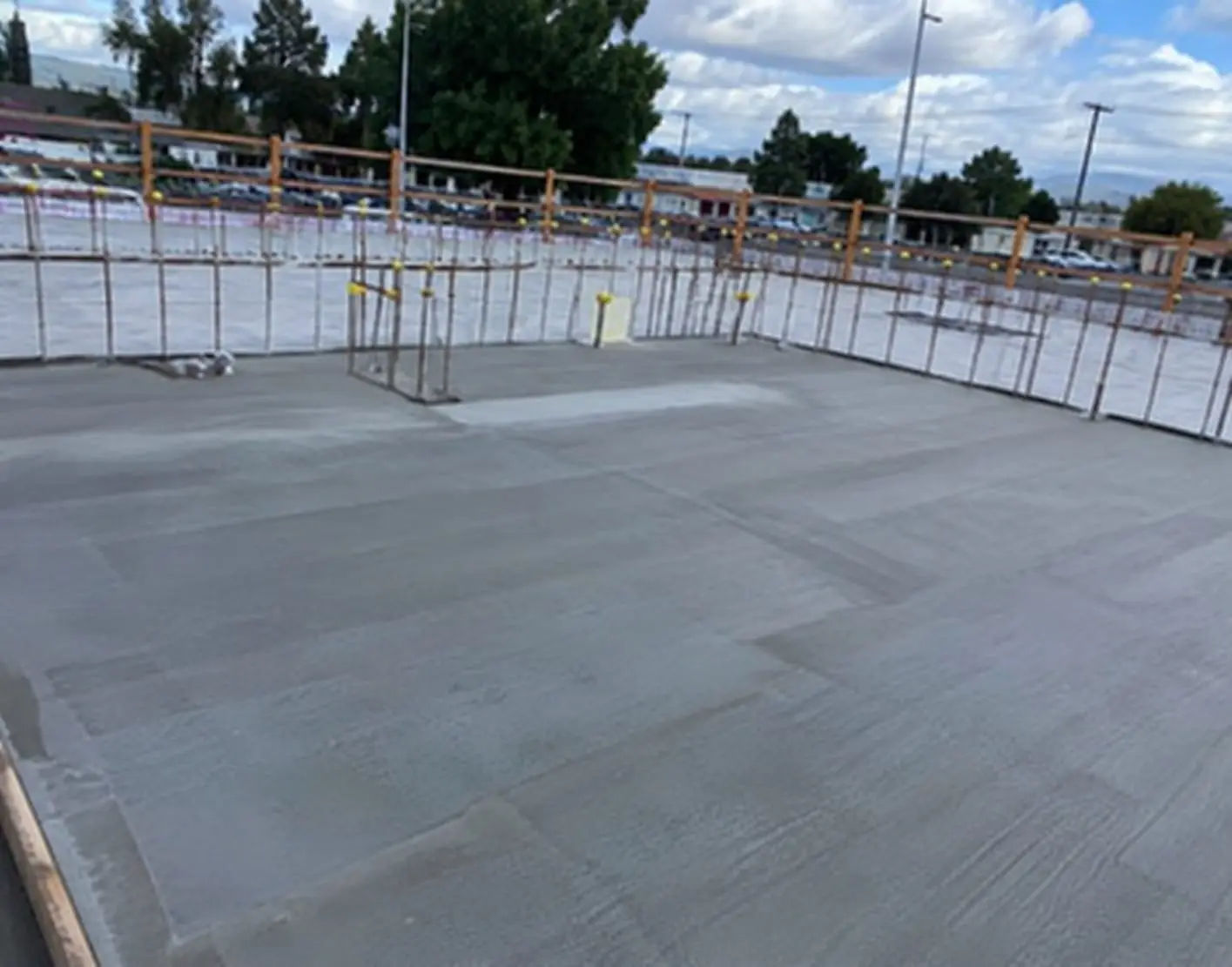
Steel and levels checked one last time, then concrete placed and finished, with a crew big enough to complete the area before the mix stiffens.
Curing, Joints And Handover
Joints cut on time, curing looked after, formwork removed and the site cleaned up. We also explain when the slab can take foot traffic and cars.
What Sets Our Concrete Laying Team Apart in Cairns
Ground Knowledge Across Cairns
From soft silt near the Barron to pockets of reactive clay and granite boulders in the foothills, local ground can change from one street to the next. We decide on base depth, thickness and steel after seeing your site, not from a standard detail.
Skilled Finishers On The Tools
The look and grip of a slab are decided in a short window after the pour. Our finishers have the experience to judge when to float, broom or expose aggregate in tropical conditions, so the surface comes out even and consistent.
Advice Matched To Your Budget
Sometimes a plain broom finish with a neat border does the job better than an expensive decorative option. We give honest advice on where spending more makes a real difference and where it does not, so your money goes where it counts.
Your Property Looked After
Fences, lawns, paving and walls are protected from splashes and truck damage, and concrete washout is kept contained rather than flushed into the gutter. When we leave, the only change you should notice is the new concrete.
Neighbours Kept In The Loop
Pour days bring trucks, pumps and noise to the street. We give neighbours a heads-up when that is likely to affect them, keep shared driveways clear wherever possible, and avoid blocking access for longer than the pour needs.
Written Aftercare Notes
Every job finishes with simple written advice covering how to clean the slab, when sealing makes sense, which chemicals to avoid and how to deal with mould on shaded areas. A little care early on helps new concrete look good for longer.
Concrete Works in Cairns


Concrete Laying FAQs
Answers to what Cairns clients ask about concrete laying: what sits under a slab, base work on clay, steel placement, curing times, wet-season pours and approvals.
Working upward, it starts with the subgrade: the natural ground left after topsoil, roots and any soft or unsuitable material are dug out. On top goes compacted crushed rock or a similar quarry base, built up in layers so it spreads the load evenly. Internal floor slabs then get a vapour barrier to stop ground moisture rising. Next comes the reinforcement, lifted on plastic or wire chairs so it ends up inside the concrete rather than lying on the base, and finally the concrete itself. Every layer relies on the one below it, so the order of work and the quality of compaction count as much as the mix strength.
Ground conditions across Cairns vary far more than newcomers tend to assume. Parts of the city are on reactive clay that expands through the wet season and shrinks back in the dry, low-lying areas near the Barron can have soft, silty soil, and foothill blocks may have rock just below the surface in one spot and deep fill in another. A slab poured on poorly prepared ground follows every one of those movements and eventually cracks. Digging out the worst material, building a well compacted base and controlling drainage gives the slab an even, stable platform, so it moves as a whole rather than bending over a hard or soft spot.
That varies with the ground conditions and the loads involved. A footpath on firm natural ground may only need a thin, well compacted layer. A driveway over soft clay or silt needs considerably more, and where the soil is especially weak a geotextile fabric beneath the rock helps stop it sinking into the soil. Whatever the depth, the base should be placed and compacted in thin layers rather than dumped in one go, as a thick loose layer will keep settling under traffic for months. For house slabs, the depth is set by the engineer's design for your site classification.
Not every one. Slabs that will become an indoor floor generally should have one, because without it ground moisture can move up through the concrete and damage timber, vinyl and tile adhesives and add to indoor humidity, which is already high enough in the tropics. Outdoor slabs such as driveways, paths and patios normally go without, since moisture passing through them affects nothing. Where a membrane is used, it only works if it stays continuous: generous taped laps, sealed pipe penetrations and edges turned up at the perimeter. A torn or poorly lapped sheet gives little protection, so we inspect it before concrete is placed.
It should be inside the slab, at the position the design specifies, not resting on the base. Steel earns its keep by resisting tension, and in a typical ground slab that usually means chairing the mesh up toward the middle or upper portion of the concrete depth. Mesh that ends up on the ground adds almost nothing. The steel must also be surrounded by enough concrete so moisture cannot easily reach it, which matters more on outdoor slabs and near the coast where salt is in the air. Getting both right costs little extra time, yet shortcuts are common, so we check chair heights and cover depth ahead of each pour.
Most slabs can handle careful foot traffic after 24 to 48 hours. Keep cars off for roughly a week, and hold heavy vehicles, structural loads or machinery until the concrete nears its design strength, which takes around 28 days. Hot weather makes concrete set faster, but it does not shorten those waiting times. Stopping the surface from drying out too fast during that early period matters just as much, because rapid moisture loss leads to surface cracking and weaker concrete. In strong sun or a dry breeze, we use curing compounds, damp coverings or evaporation retarders to slow it down.
All concrete shrinks as it dries and gains strength, and that shrinkage will crack the slab somewhere unless it is given an easier place to go. Control joints are deliberate lines of weakness, cut or tooled to about one quarter of the slab thickness, giving the crack a tidy place to form instead of zigzagging across the surface. Timing is critical: saw too late and random cracks may already have started, go too shallow and it achieves nothing. Spacing matters too, and long narrow shapes or corners need extra thought. We set out the joint pattern before pouring so it suits the shape of the area.
It can be done, with closer management and more flexibility. A heavy storm can fill an open excavation, force a pour to be postponed at short notice, pit a freshly finished surface, or leave clay too soft for a loaded truck to cross. Heat and humidity add their own pressures, since concrete goes off quickly, so we may use a retarder, schedule pours for the cooler early hours and keep the slab covered and damp while it cures. Work continues through the year, though wet-season schedules include more buffer and we flag likely weather delays early. If a job is not urgent, the dry months from about May to October are often easier.
Then the concrete is pumped or barrowed in. A line pump or boom pump can push concrete a long way and over houses, fences and steep banks, which suits the rear yards, sloping blocks and narrow side access found in many older Cairns suburbs. Pumping adds expense, and the pump needs a level spot on the street or driveway to set up. Barrowing works for small volumes over short distances but takes more labour. On larger areas, splitting the work into separate pours with a proper construction joint can also help. We settle on the method when we inspect the site and build it into the price.
The answer depends on how the slab will be used. A straightforward driveway, path or patio on your own land often does not need building approval, but connecting a new driveway to the street usually requires a permit from Cairns Regional Council. Slabs for homes, extensions, garages and larger sheds usually count as building work needing approval through a building certifier, with engineering to standards such as AS 2870. Every situation is a little different, so check with Cairns Regional Council or a private building certifier before you start. Before any digging starts, we request service plans from Before You Dig Australia so buried pipes and cables can be avoided.
Other services you might need
Planning a concrete feature for your property?
Give us the site address and we will book a time to inspect it with you.